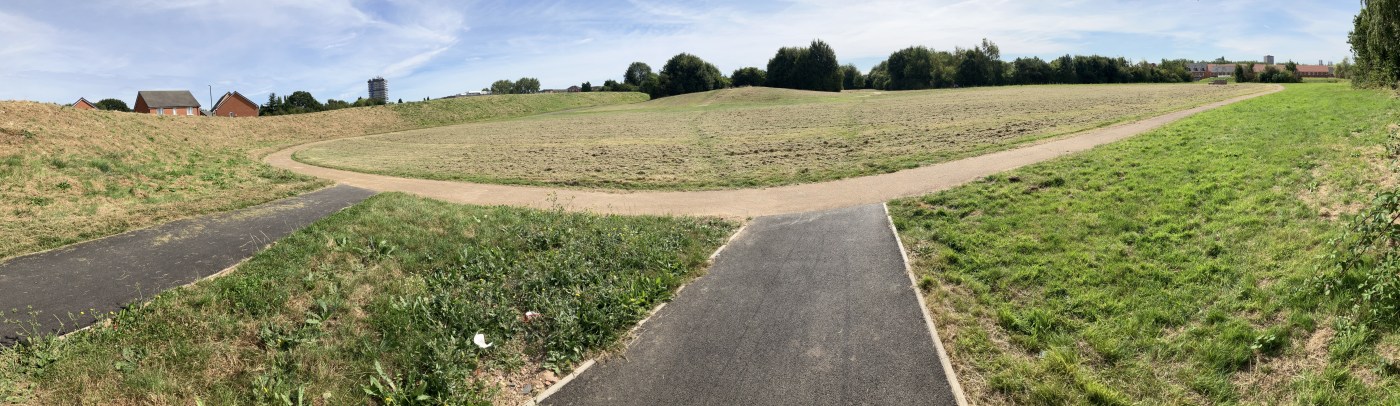
Talking Birds is delighted to announce that we have been awarded some funding to begin work on the Green Ways project.

Quick Links >
About Green Ways and the Citizens’ Assembly:
Green Ways is one of the nine recommendations from the Citizens’ Assembly that Talking Birds held in 2021, exploring the role of arts, culture and creativity in shaping a better future for Coventry. The Assembly recommendation ‘Green Ways’ reads:
Create a network of pocket parks and green spaces – connected by walking and cycling trails throughout the city, incorporate art and sculpture, build new parks and incorporate existing ones.
Working with 8 artists, we’re now exploring what it might take, and what it could mean to local people, if Coventry were to make this vision of the Green Ways a reality.
We’ve mapped a pilot route that links Stoney Stanton Road to Radford Road (with various other routes linking to it) and, in September and October, our artists will be working on a variety of projects with people who live and work alongside this route to explore the Green Ways; sow and gather ideas of how communities might be able to make small changes to green their local area; and build support for the idea (and creation) of safe, green active travel routes that cut across – and make new connections between – neighbourhoods.
These ideas will be brought together in a hands-on, family-friendly, neighbourhood Green Ways mini-festival at the beginning of November – watch this space for details!
Introducing our Green Ways artists:
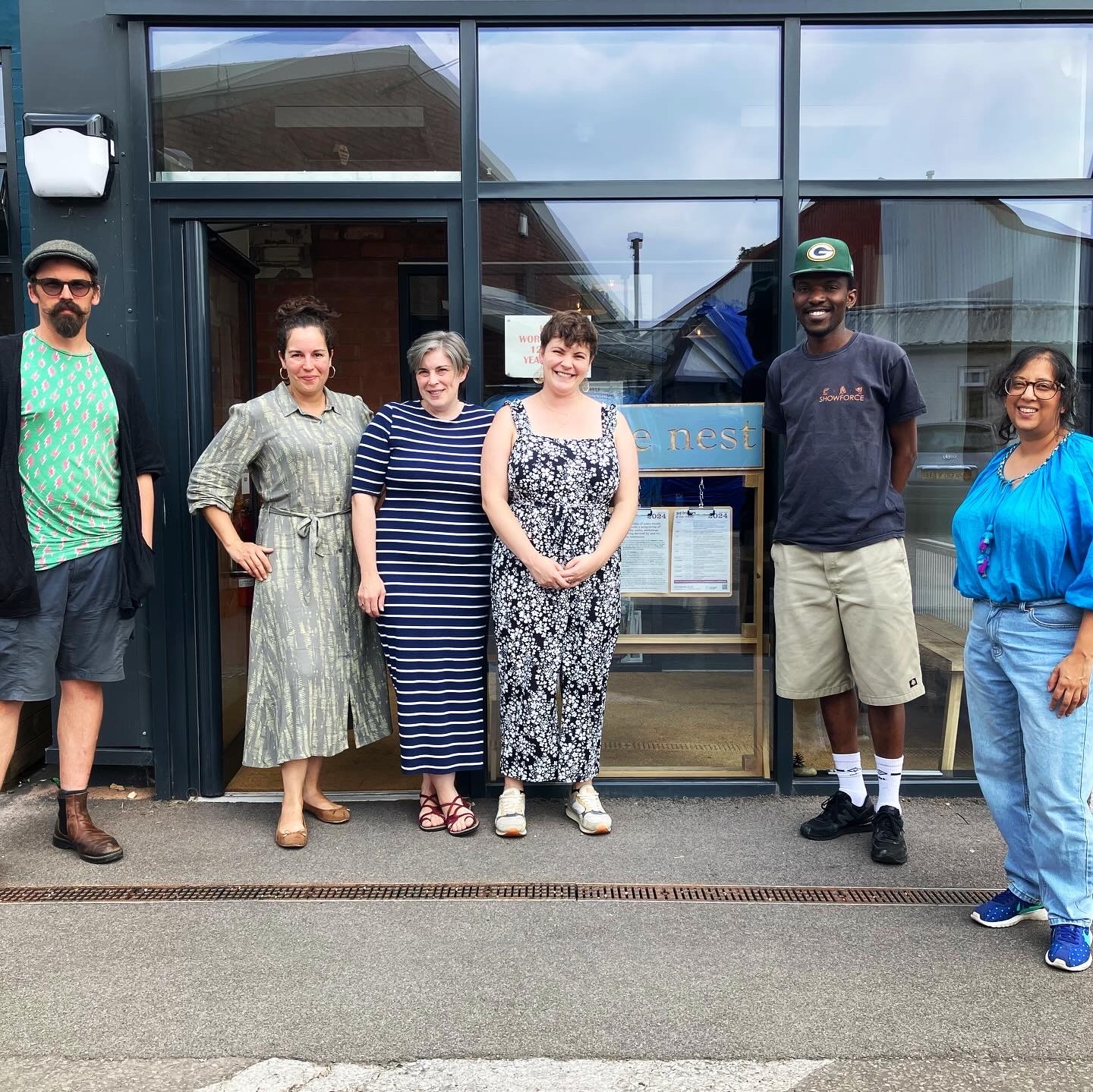


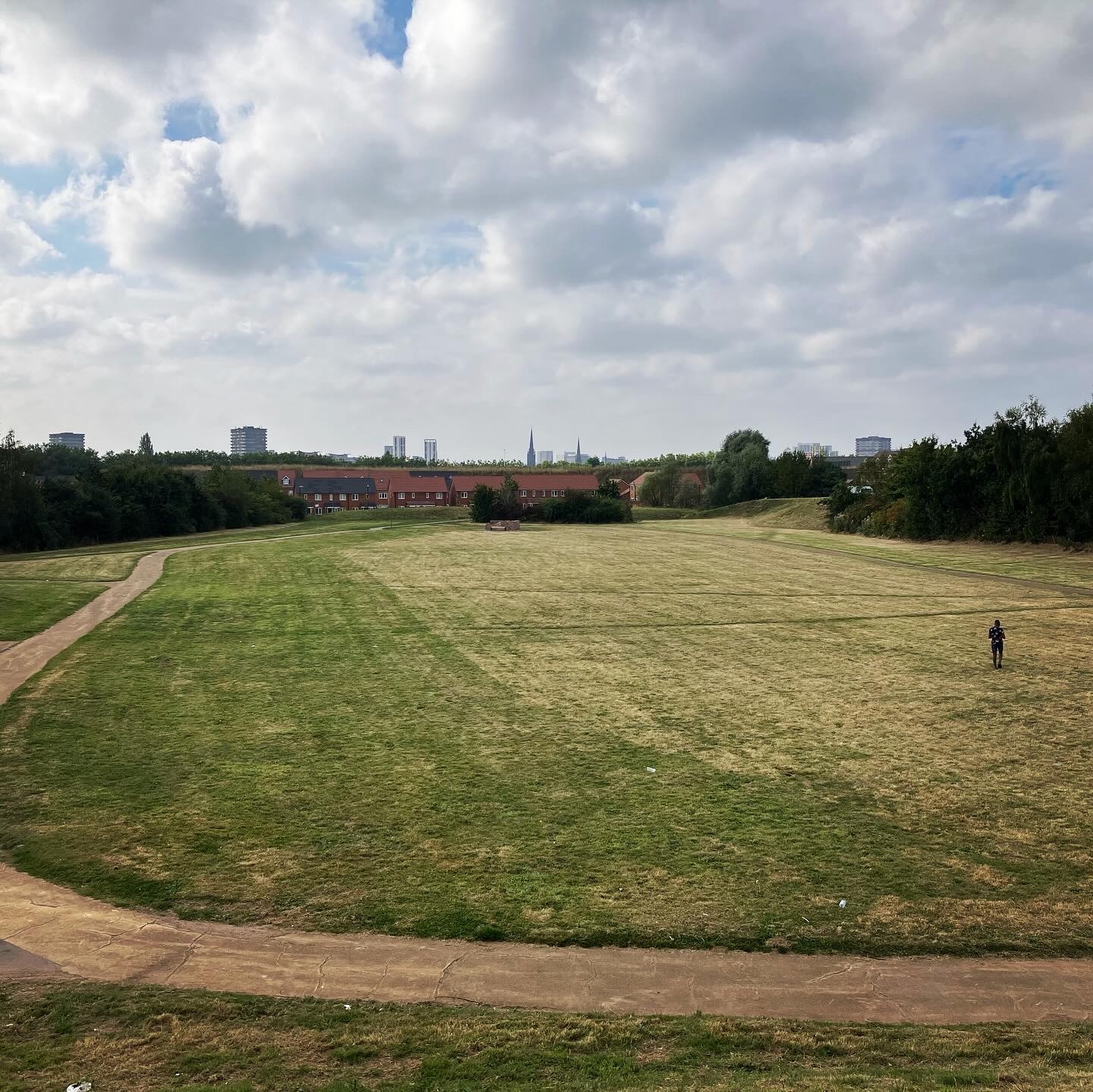

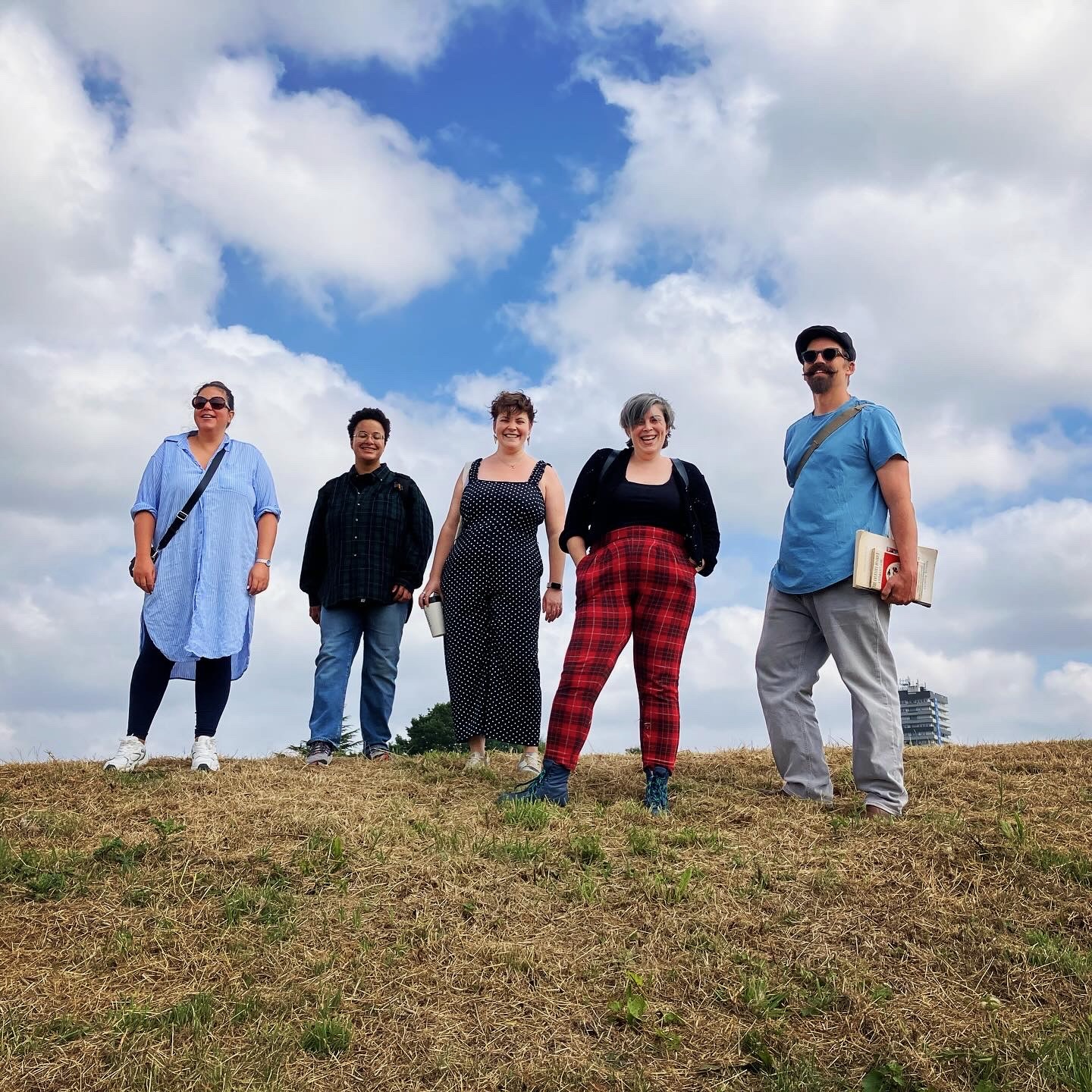
We are delighted to be working with Lou Sarabadzic & Tarla Patel; Pippa Church; Japhet Dinganga; Lisa Franklin; Rene Francis-McBrearty; Navkiran Kaur Mann; and Dom Breadmore/Ludic Rooms (some of whom got photographed twice as we couldn’t get everyone together on the same day!)
What do we mean by ‘greening the neighbourhood’?
Green space has disappeared from the UK really quickly in the last 50 years. If you have lived in the same house for a long time, you might remember that there used to be more front gardens full of plants along the street, but now maybe most of those gardens are paved to accommodate a car or two? There may have been school playing fields close by that were sold off in the last 15 years and are now housing estates – maybe some of these new gardens even have plastic lawns?
One of the things that we learned in the UK during the pandemic was just how valuable green space and access to the natural world is to humans (who after all, are part of the natural world). Making spaces for wildlife, and spending time in nature taking note of what we see, are two things we can do that are good for us and good for biodiversity – there are lots of places you can look for advice on how to get started on making your garden/balcony/yard welcoming to nature (for example The Wildlife Trusts and the Natural History Museum) but it’s also inspiring to look about and see what others have done that you might be able to copy (for example, here’s a blog of photos of community gardens and on street planters taken on a recent visit to London and here’s some photos of the mini wildflower meadow at The Nest).
So – by greening the neighbourhood – we mean things like:
– Growing plants in your garden/balcony/yard/street that bring you joy and are good for bees, butterflies and other pollinators;
– Growing things on your street that are good to eat (and eating them – and maybe sharing them with your neighbours) or joining an allotment community if you need more space;
– Valuing your local parks and greenspaces, maybe joining or forming a ‘friends of the park’ group that might organise litter-picks, dog walks, picnics or family play days there;
– Planting wildflower seeds in your lawn and leaving it to grow longer during the summer so you can enjoy both the flowers and the butterflies;
– Adopting the scrappy bit of grass outside your house that no-one seems to own or care for and planting something there that will make it look a bit nicer, and also benefit pollinating insects.

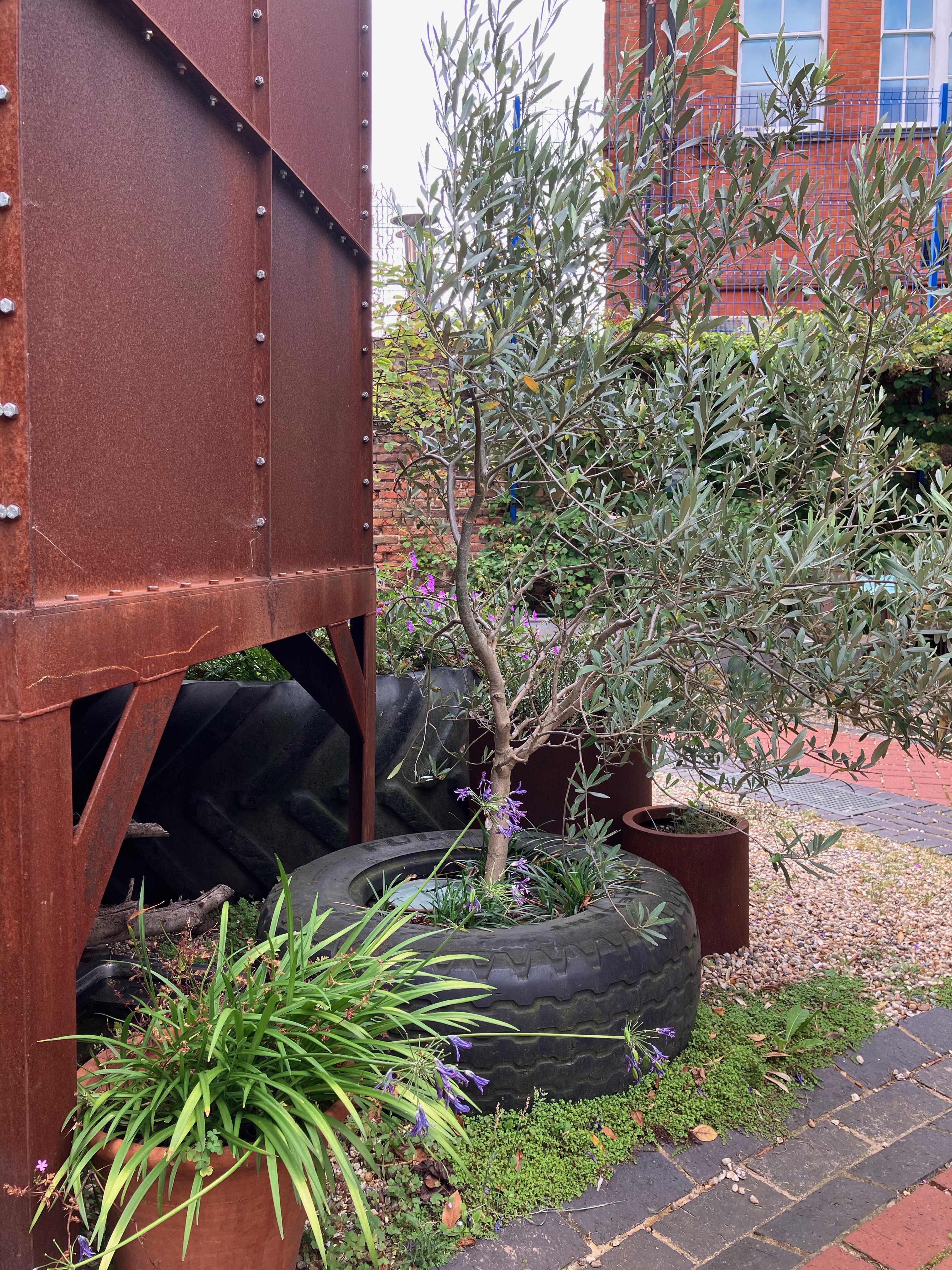


If lots of people do even just one of these things, imagine the difference this could make to the way the neighbourhood looks and feels! Imagine the benefits to nature of all these new wildlife-friendly spaces – and the more these join up, the easier it is for insects and birds to move around the country from green space to green space. Taking this a step further is the idea behind the Green Ways recommendation – greener, nicer routes for humans too, making journeys more pleasant, and meaning that we don’t have to jump in a car to avoid walking/wheeling/cycling through (whilst adding to) air pollution on major roads!
Taken together, all the gardens in Coventry cover a far larger area than all of the parks – if we can green our neighbourhoods we are not only making the neighbourhood a nicer place for us to live, we are getting to know our neighbours, we are building community, and we are taking positive action on the climate and biodiversity crises.
The purpose of this project and commissions:
This project aims to prototype the first route, using arts and cultural activity with communities in neighbourhood green spaces (or spaces that could become green-ed as part of the project) to generate a sense of engagement and ownership.
We want to recognise, uplift and connect spaces/groups that already exist, and empower local people to engage with, adopt/feel ownership of and start to care for the scrappy or unloved spaces that will be highlighted, regenerated and connected in the making of the route – to increase their sense of, and pride in, their place.
We want to show people what the Green Ways could be, and use this project as a way to kickstart practical action through arts and cultural activity that also facilitates conversations about the Assembly recommendations, taking action on climate, what residents can achieve in their neighbourhoods, active travel, connecting communities and more.
In order to make this project happen, we have put together a team of artists and artist-producers to bring this first proof-of-concept Green Way to life. This project aims to:
- map the route for the first Green Way and, in doing so, test the idea and principle;
- engage local community groups and residents along the route in arts-and-nature-based activity and, in doing so, encourage feelings of ownership/community/pride/achievement/connectedness;
- produce a ‘linear festival’ that encourages residents to share their work with each other and their communities (and neighbouring communities) and to explore the Green Way via creative/festival/climate conscious activities.
- catalyse further action (which may or may not involve us) so, where possible, artists will facilitate networking and sharing skills with, and between, key community groups/members.

 talking birds
3 replies on “Green Ways”