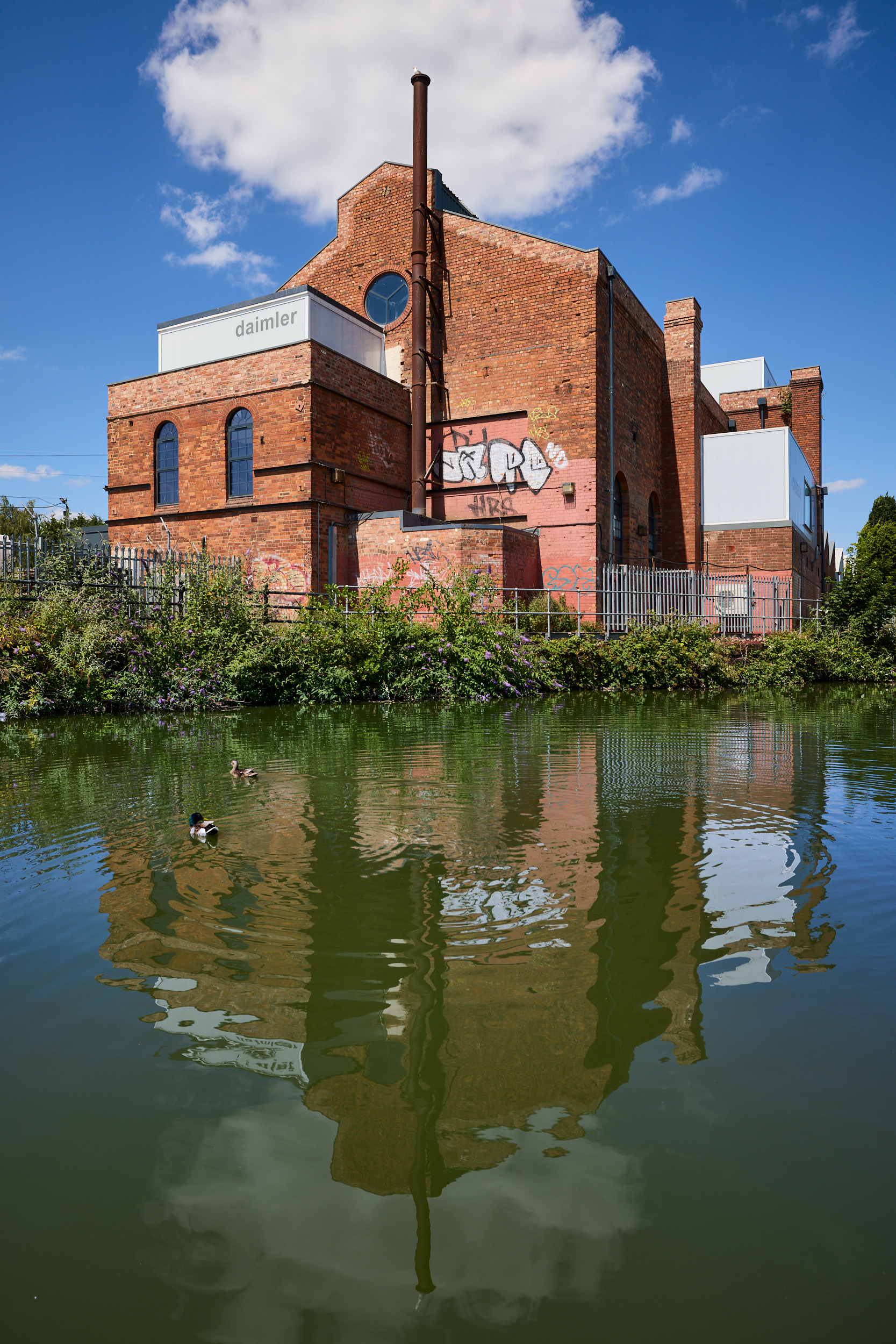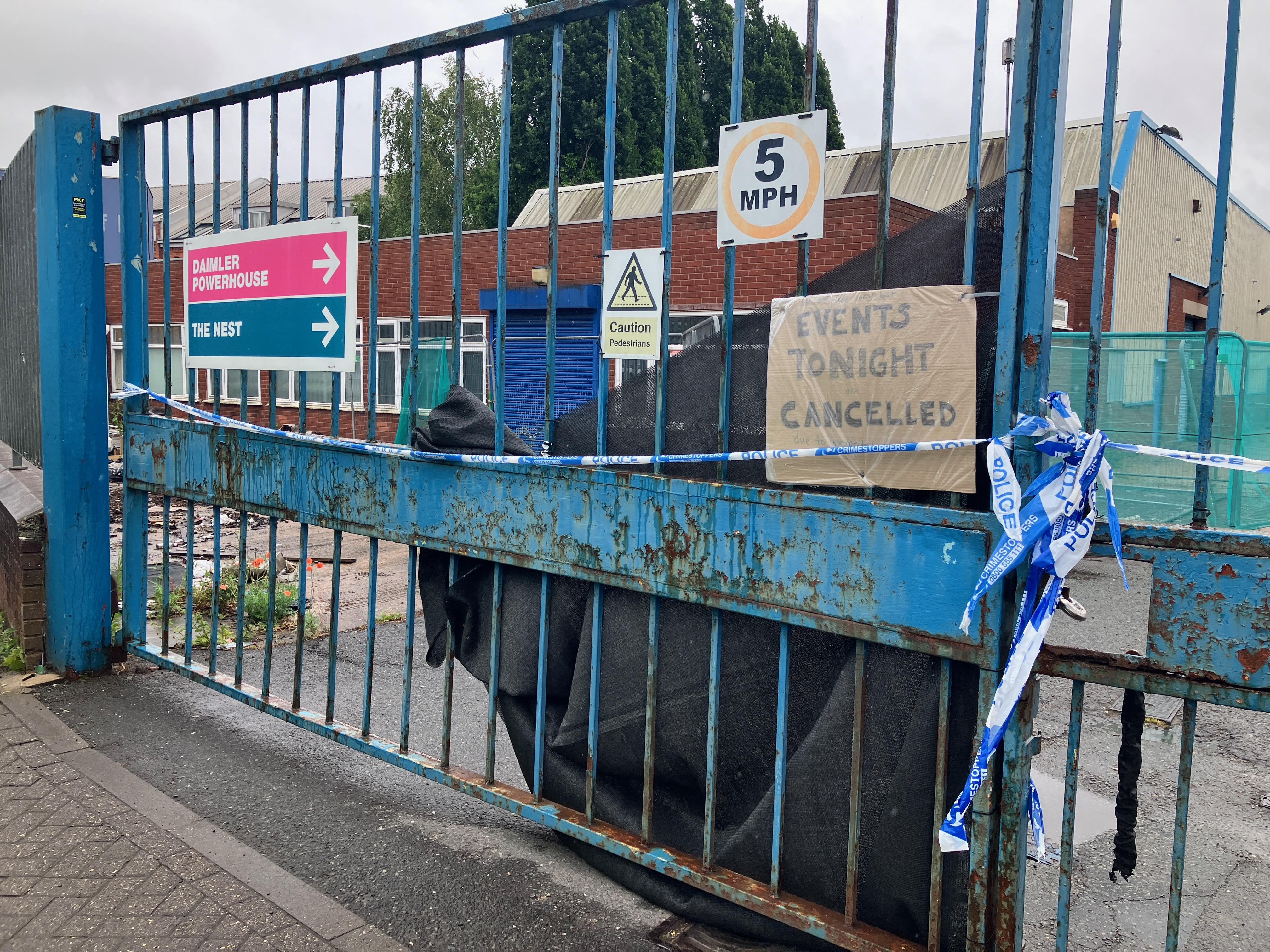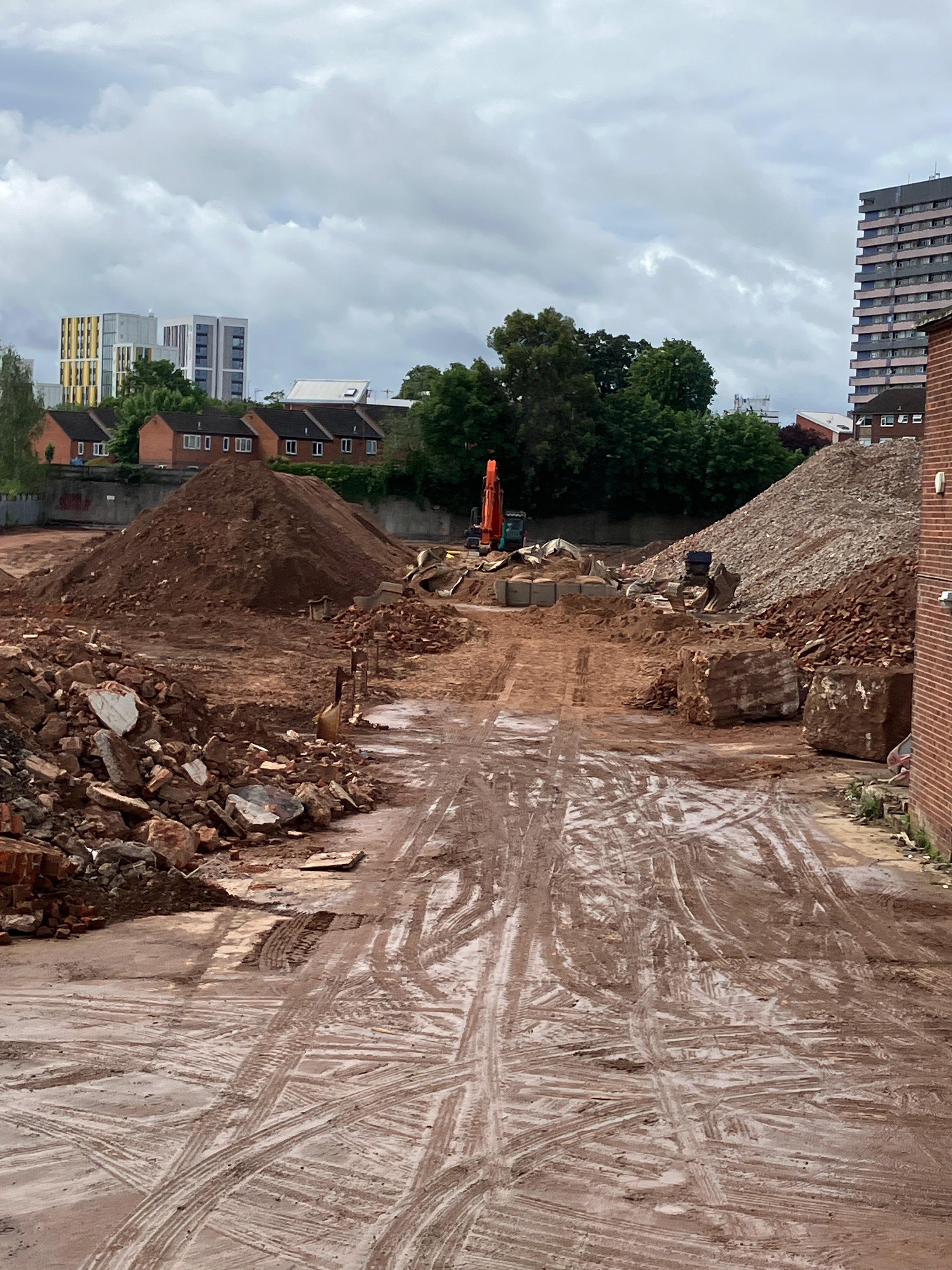
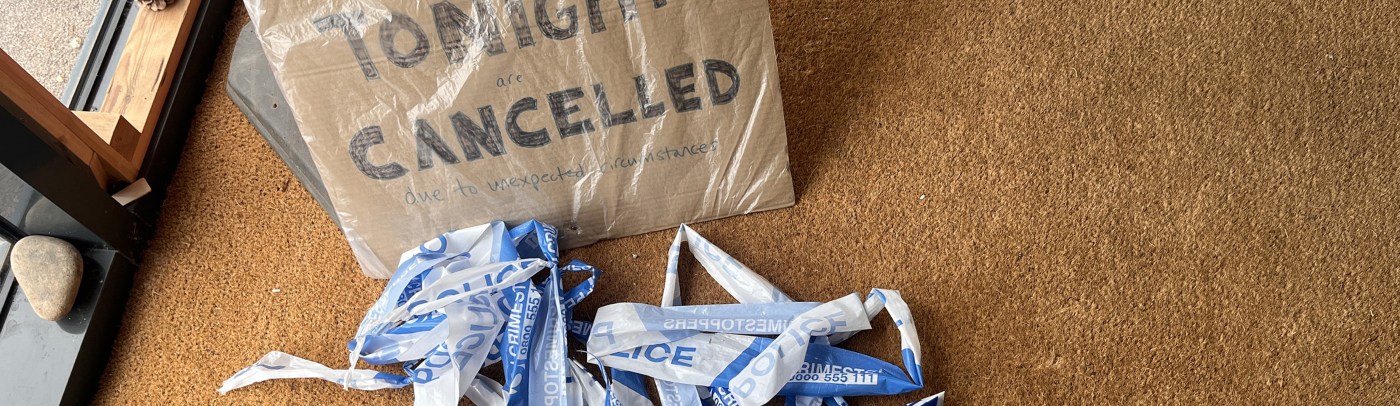
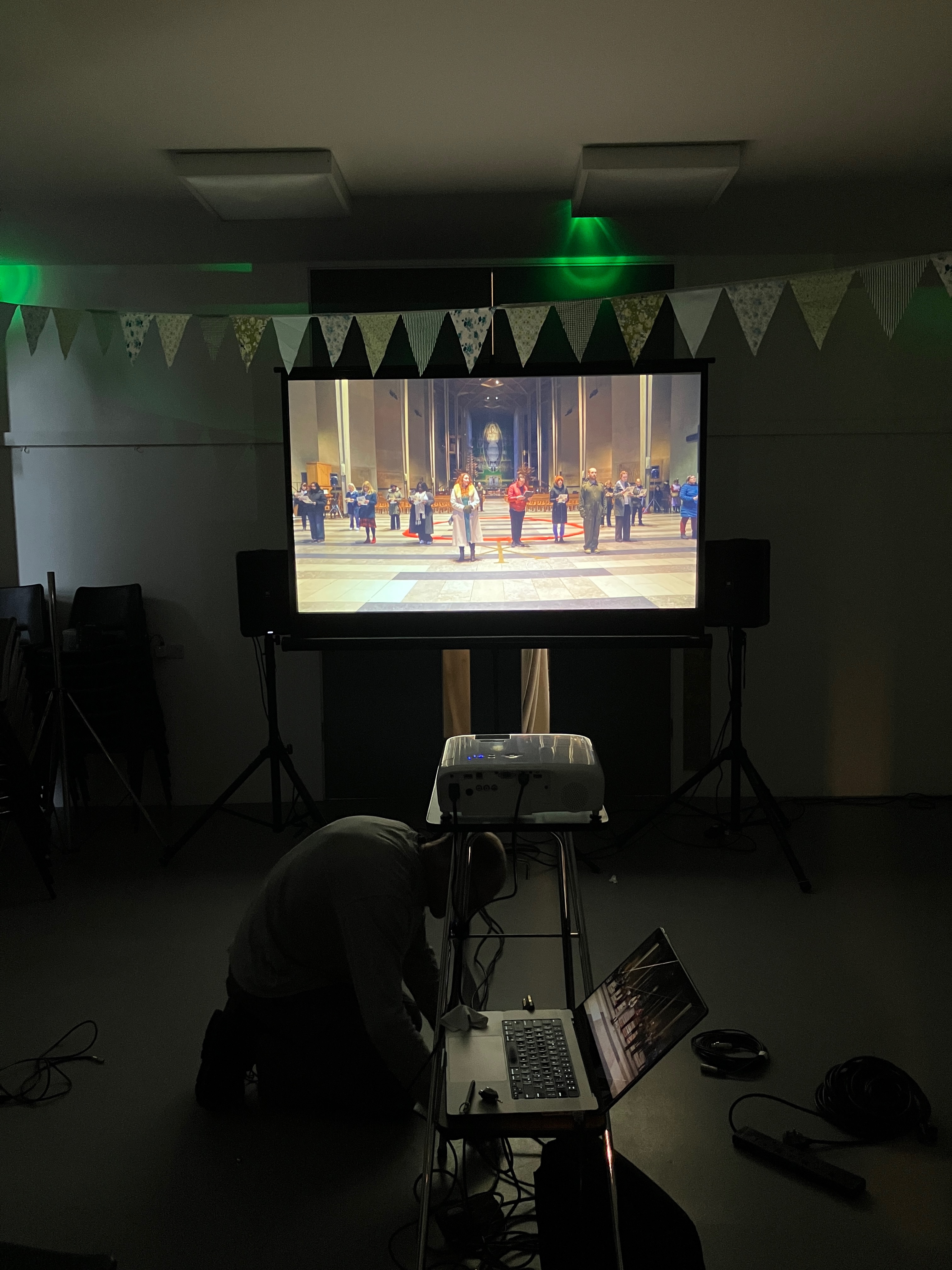
There was a change of plan on Tuesday night (2 June 2026), when we were due to screen It Takes a City, our play about bomb disposal, at our HQ The Nest in Sandy Lane Business Park, Coventry (part of the Daimler Powerhouse). Events conspired otherwise as we evacuated our building less than an hour before the screening was due to start. An unexploded WW2 bomb had been uncovered during excavations at the building site next door, and the EOD (Explosive Ordnance Disposal) team had arrived onsite, about to start the careful work of unmaking a bomb.
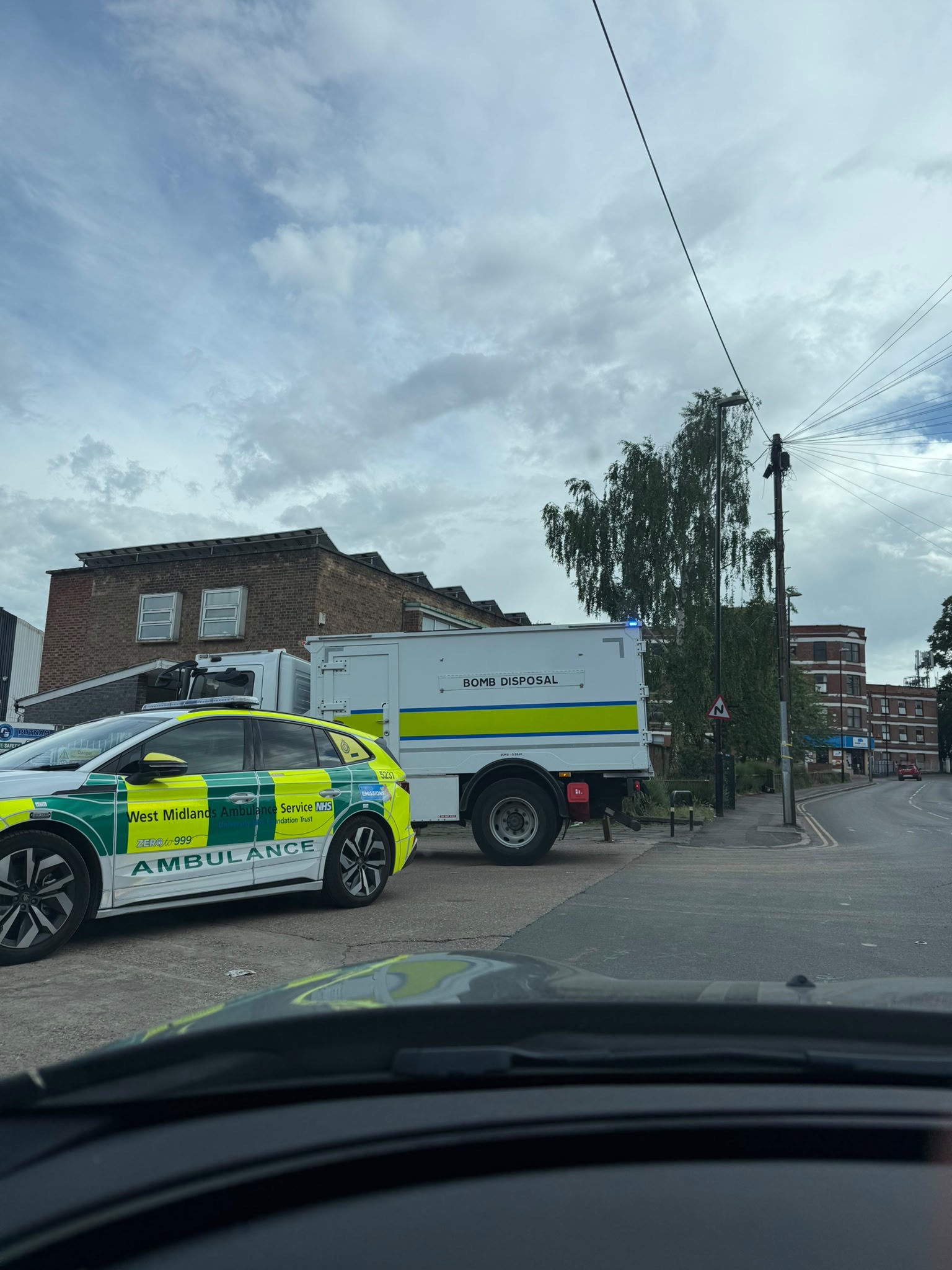
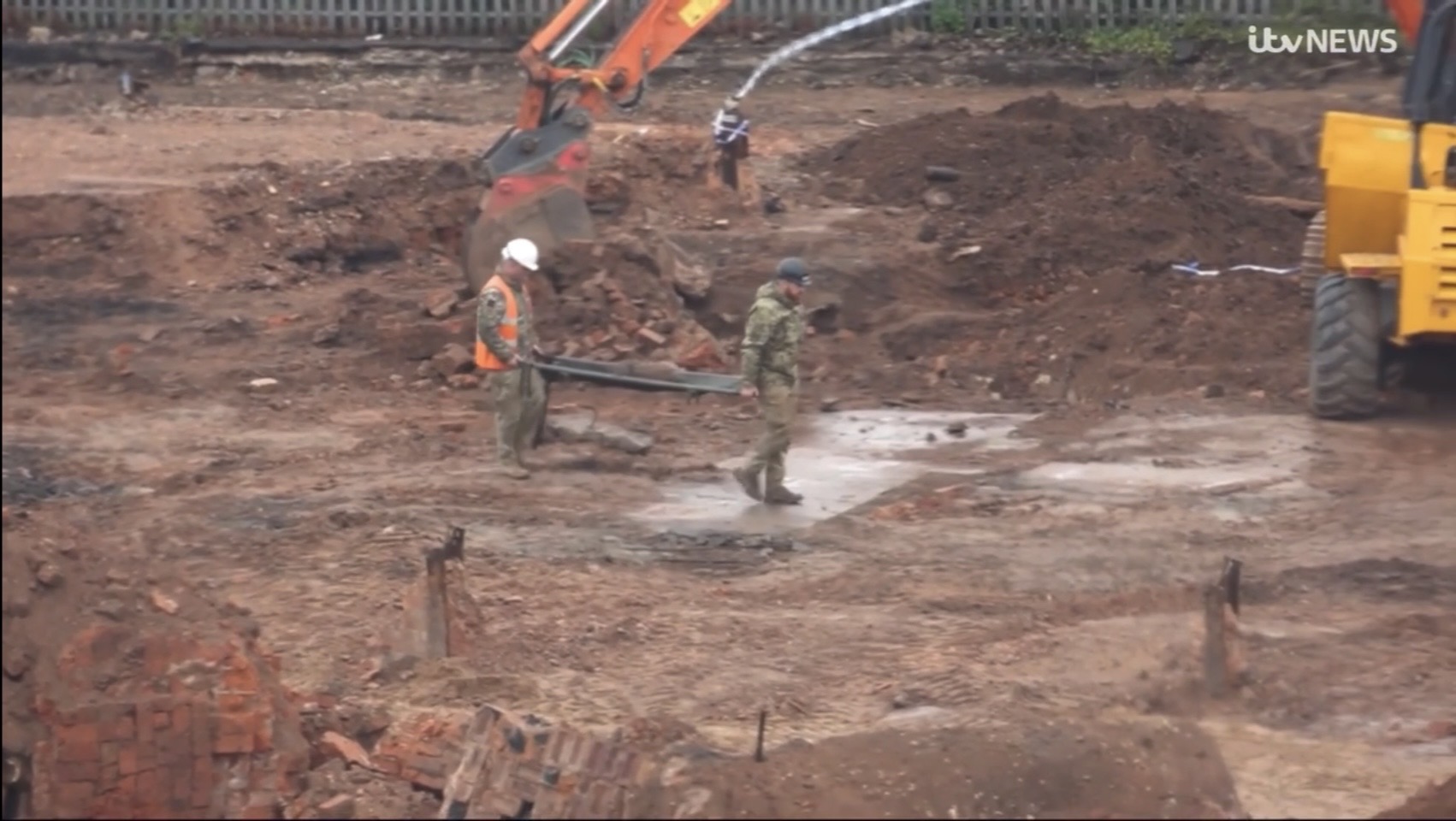
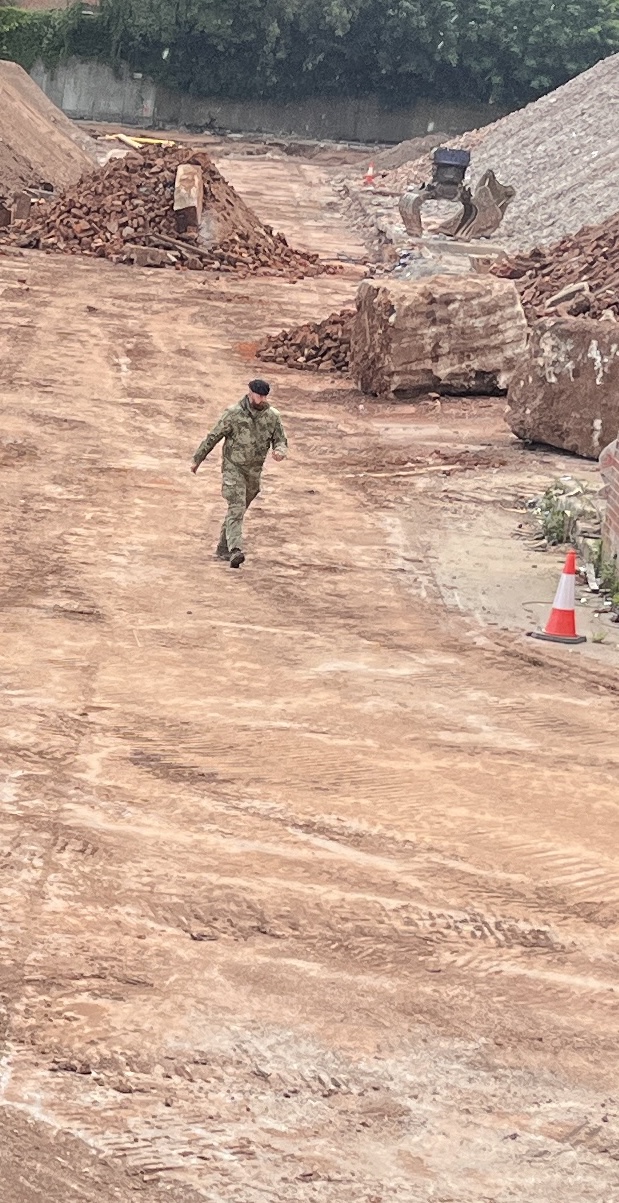
[8th Engineer Brigade at work this week on Sandy Lane]
It Takes a City was performed on 15th November 2025, the 85th anniversary of the ‘day after’ the aerial bombing of Coventry. It told the story of two unexploded bombs – one found in Chapel Street in 1940, and one uncovered in 2008 on a building site behind the Belgrade Theatre – and of the selfless actions of the two Bomb Disposal teams tasked to deal with them.
The Chapel Street bomb in 1940 was transported to Whitley Common, so it could be detonated away from vital munitions factories, but it went off as the seven men of the Royal Engineers, 9th Bomb Disposal Company were unloading it, tragically killing them all.
The Belgrade bomb of 2008 – which was found adjacent to the Theatre, under a 200 foot crane and next to a gas main – was deemed too risky to transport, so was carefully carried 40 metres towards the ring road by a bomb disposal officer from 33 Engineer Regiment, before being buried and then safely detonated.
We recreated that 40 metre journey in the ruins of Coventry Cathedral with a community cast and audience of nearly 400 people, who were then led to the New Cathedral where Dean John Witcombe voiced the words of his predecessor Michael Provost Howard from 15th November 1940, who pointed to the smouldering ruins – bombed the night before – and said, ‘We shall build it again’.
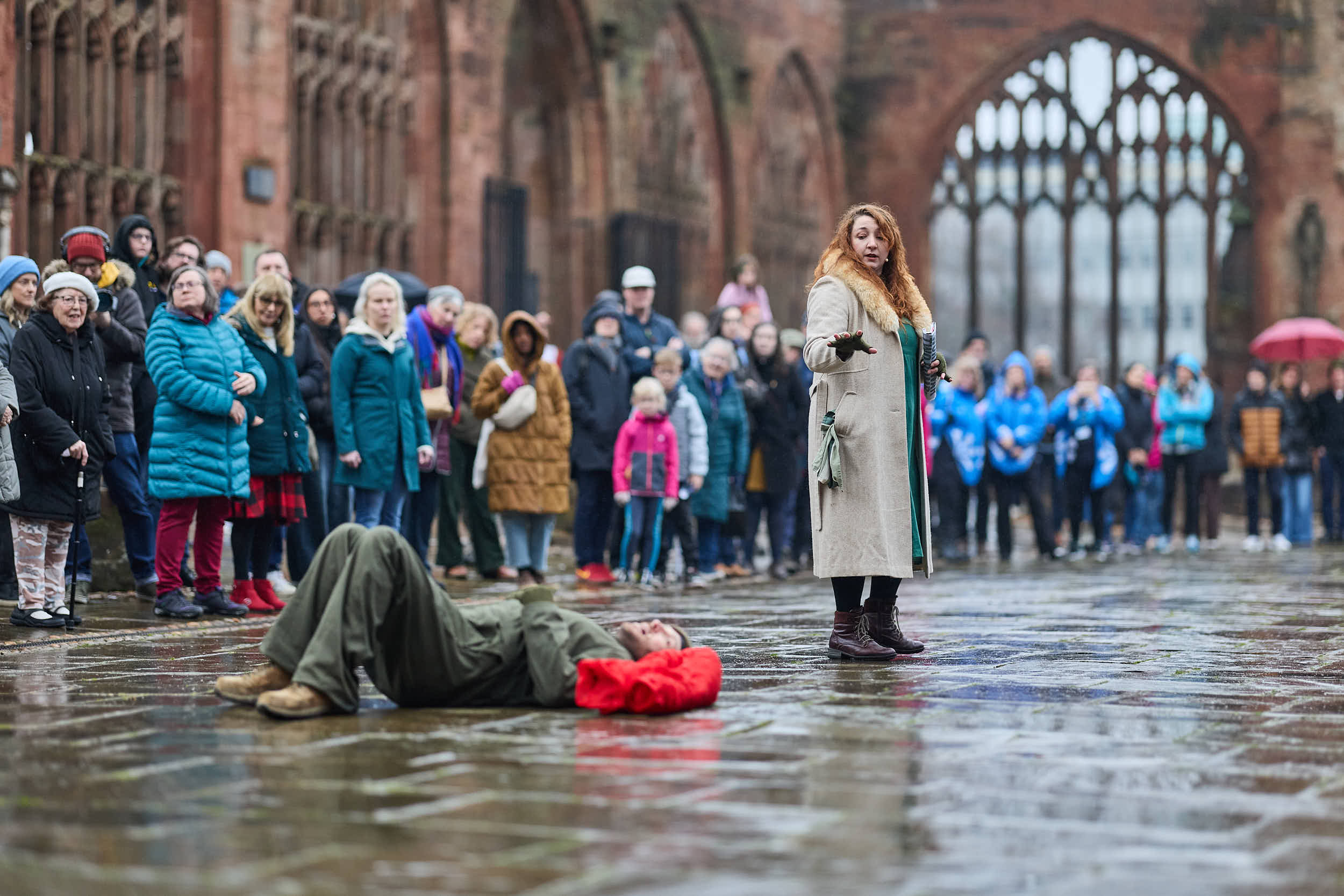
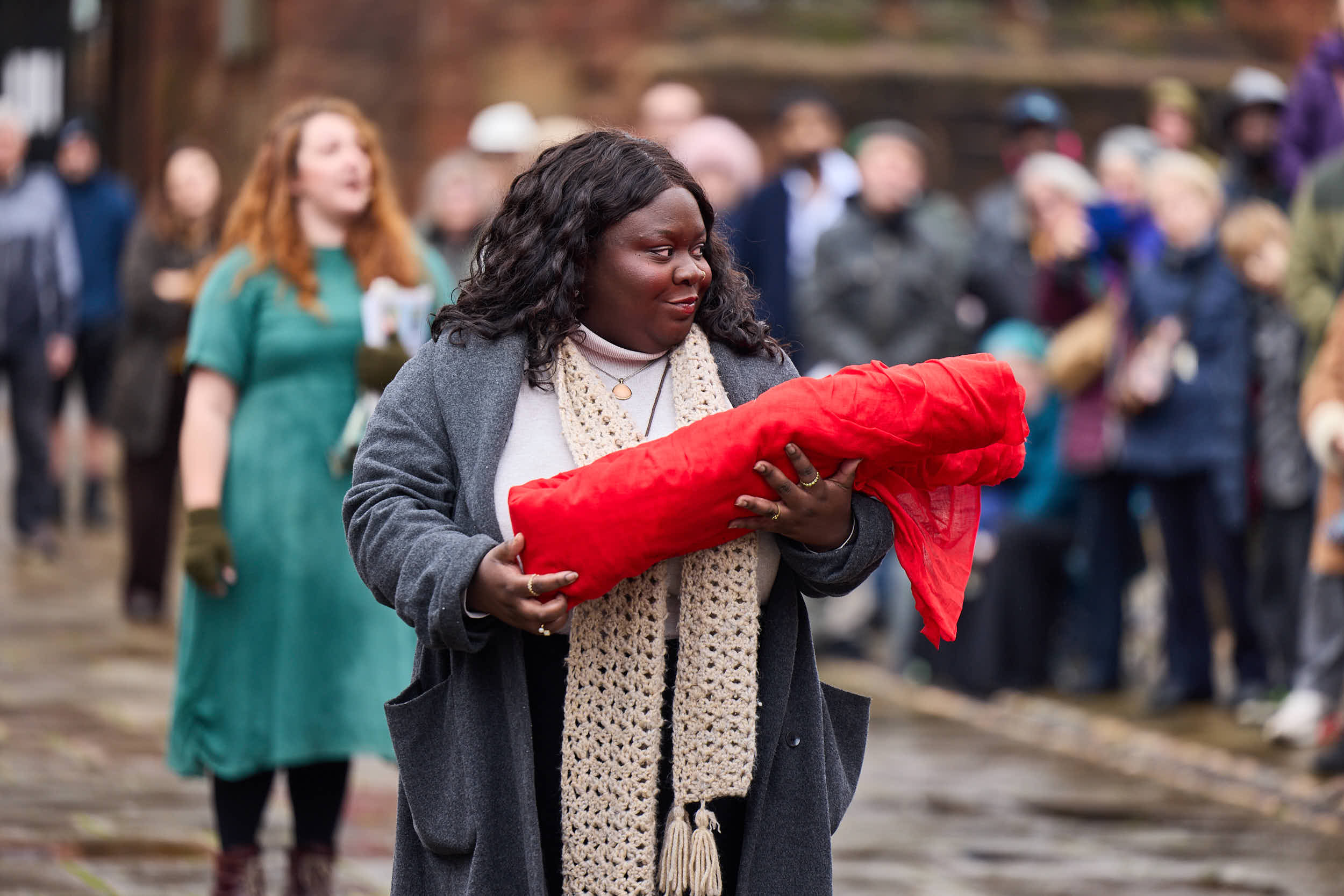
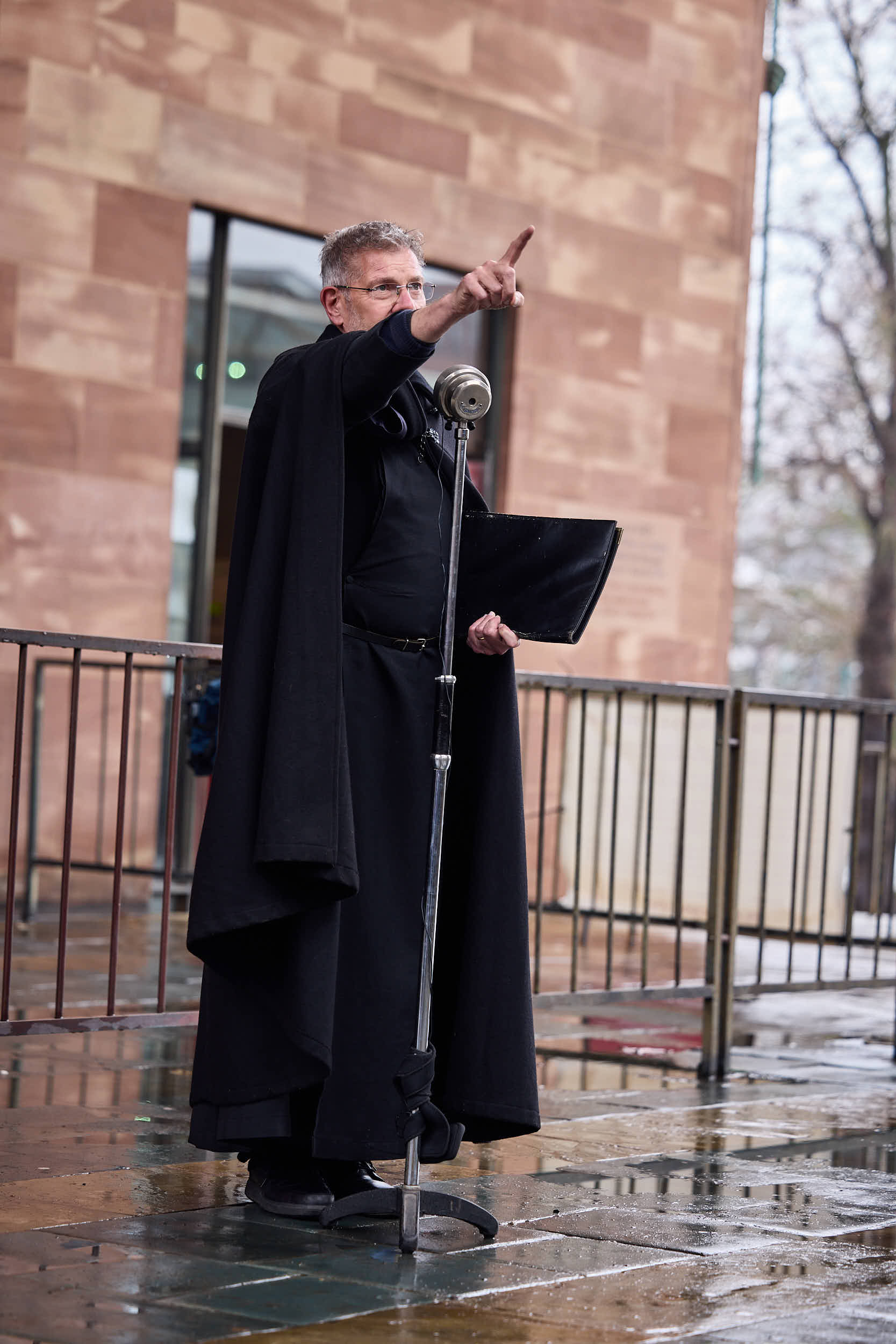
[Richard Colvin & Amy Kakoura (left) and Dean John Witcombe (right) in Its Takes a City by Talking Birds, photos by Andrew Moore]
It takes a City to make a bomb. A city to unmake one.
Earlier this week, that slow, careful walk was mirrored as two of the EOD team carried the Sandy Lane bomb on a stretcher to where is could be safely exploded – but not until it had been buried under 300 tonnes of sand – at about 9pm on Wednesday night. It was the first time the bomb had been touched since a worker in a factory over 80 years previously carefully filled it with high explosive and another worker carefully loaded it onto an aeroplane destined for Coventry, where it might have been dropped on 14th November 1940, or more likely 8th April 1941 when the Daimler factory was largely destroyed. The Daimler Powerhouse, now an arts creation space, is the last remaining part of that factory, where, at the time, thousands of workers were themselves making engines for aircraft, while in factories nearby, other workers were preparing their lethal payload.
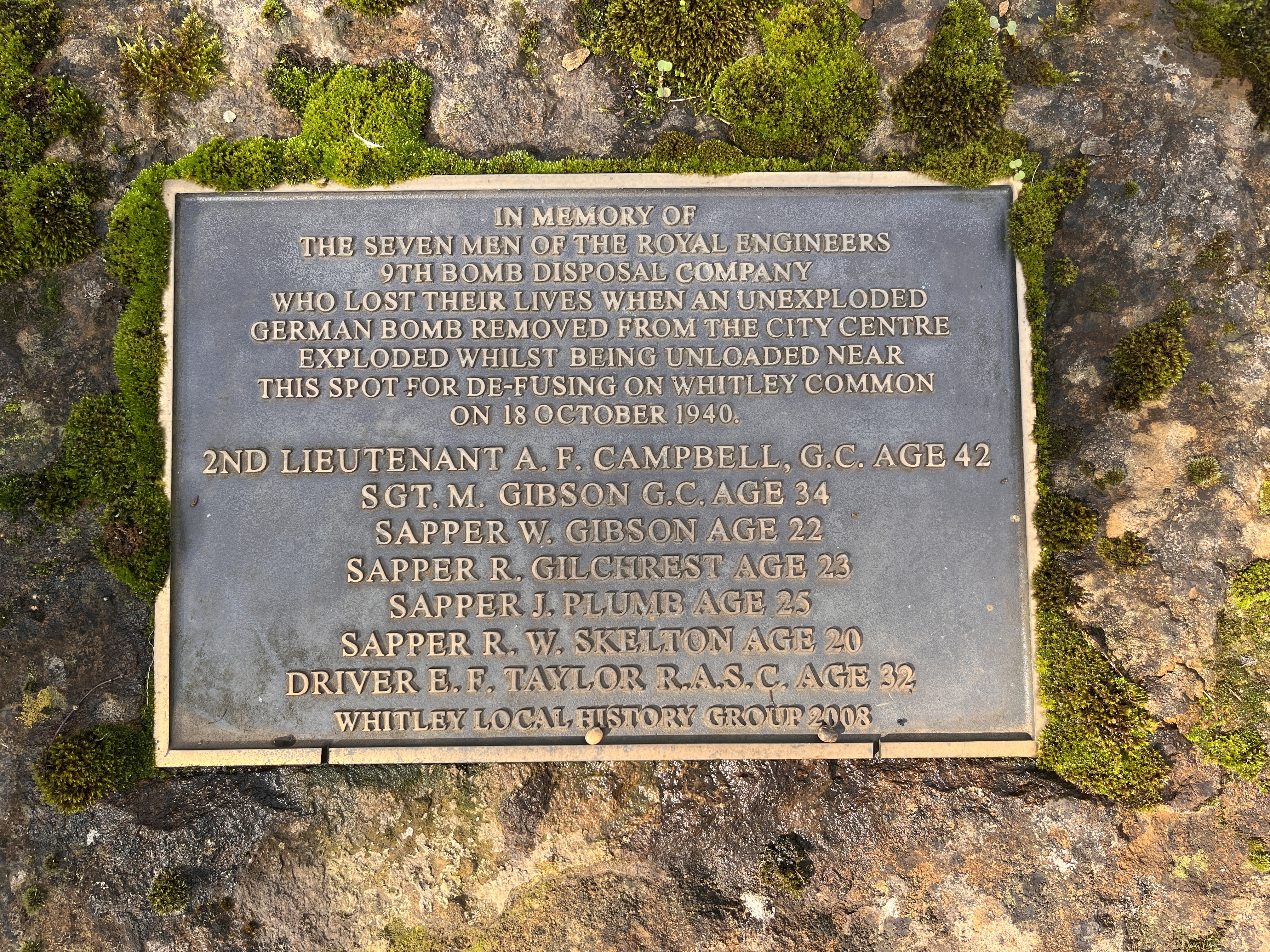
[The plaque on Whitley Common, commemorating the 7 men of 9th Bomb Disposal]
The seven men of 9th Bomb Disposal are buried together under four headstones in London Road Cemetery, and are commemorated by a plaque on Whitley Common. The practices of Bomb Disposal have evolved greatly since 1940, but their story, and the events of this week, are a reminder of the dangers faced on a daily basis by those whose job it is to keep the rest of us safe. When researching the play, we interviewed a retired bomb disposal expert and as we were wrapping up he remarked that he’d never met a selfish bomb disposal officer.
We are now back in our building and local people have returned to their homes, while 8th Engineer Brigade (EOD) have moved on to their next job. Another day, another bomb.